Workforce Training at the Speed of Industry
Virginia’s FastForward program offers locally relevant job training and certifications — efficiently and affordably
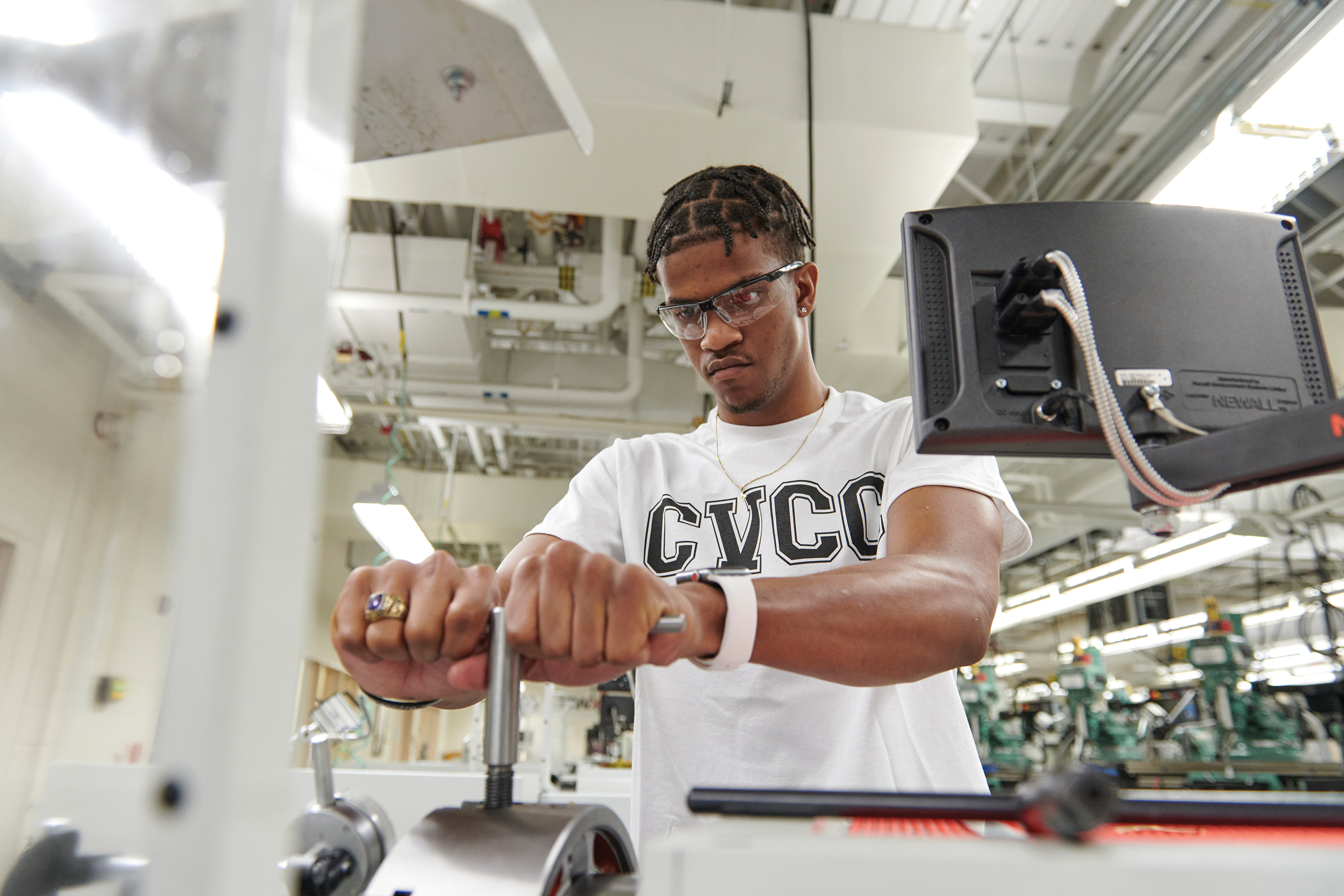
Central Virginia Community College
L. Scott Bradshaw enrolled at Mountain Empire Community College (MECC) in Wise County as a student who needed a second chance after spending 57 months in prison. He had a job in a tire shop, but he wasn’t earning enough to pay off his fines and take care of his daily needs.
Bradshaw started taking night classes to earn a National Center for Construction Education and Research (NCCER) electrical certification and followed that with a heavy equipment operator certification and a commercial driver’s license. With those certifications — and in less than two years — he landed a job at Sturgill’s Construction in Gate City, where, he said, he gets to “play in the dirt all day and get paid for it.” More importantly, he’s increased his earnings to the point where he’s been able to buy a house and plan a wedding.
Bradshaw’s training at MECC was part of Virginia’s FastForward program, a subsidized, accelerated workforce training program that prepares students to earn industry-recognized credentials. The program was launched in 2016 with the goal of helping Virginia workers obtain in-demand credentials in fields of need. Since then, it has helped students earn more than 64,000 credentials.
Getting Underserved Virginians to Work
“What we recognized in our region was we had a lot of 18-to-25-year-old males who weren’t doing anything,” said Dr. Kris Westover, president at MECC, where the most popular FastForward programs include training for power line workers and commercial drivers. “They weren’t going to school, they weren’t working — they were basically disengaged. Some of these [programs] are a direct attempt to try and get that population back into the workforce.”
FastForward caters to adult learners and other special populations of workers. The average student is 34 years old, and 90% of students have not been enrolled in any of the Virginia Community College System’s (VCCS) 23 colleges in the last 15 years. Nearly half are from underrepresented populations. Nearly three-fifths have dependents, and they are more than twice as likely to receive Supplemental Nutrition Assistance Program or Temporary Assistance for Needy Families benefits than other college students.
Importantly, given the financial need of many students, FastForward training isn’t just timely and useful — it’s affordable. Referred to in the Code of Virginia as the New Economy Workforce Credential Grant Program, it was first appropriated $5 million in general funds for fiscal 2017. Funding has since quadrupled to over $20 million annually. Those monies are used to cover up to two-thirds of the cost of training, leaving students who complete their program to pay just one-third of the cost.
Qualifying students may also receive funding through Virginia’s G3 program, a means-tested funding stream that covers tuition, fees, and books. Students who receive both FastForward and G3 funding pay as little as $0 for training.
“Finding out that I didn’t have to pay for the class was a blessing, and the reason I signed up,” said Jamod Winborne, who completed the heavy equipment operator program at Paul D. Camp Community College in Franklin.
With such strong incentives, it’s unsurprising that 94% of students complete FastForward programs, and 70% receive credentials. (Students are required to reimburse another third of the cost if they don’t complete a course.)
“It gives us an opportunity to meet folks where they are and really help them see a pathway to a better life in small bites, and steps that they can take, and that they can actually envision themselves being able to accomplish,” Westover said.
Students who complete their training and earn a credential see an average salary increase of nearly $16,000, with 78% obtaining paid vacation and employer-paid medical insurance. More than three-quarters say they’re satisfied with their job duties, job stability, and work schedule post-credential.
“It’s not a two- or three-year investment in time. It’s quick, it’s focused, and it is aligned to what the jobs are in your region,” said Randall Stamper, VCCS’s associate vice chancellor for career education and workforce programs. “You’re not throwing a dart and saying, ‘Well, I’m going to study this and hope I get a job.’ The colleges can say, ‘You know, here are the programs where people are getting jobs. Here are the salaries of those jobs, and we can get you prepared.’”
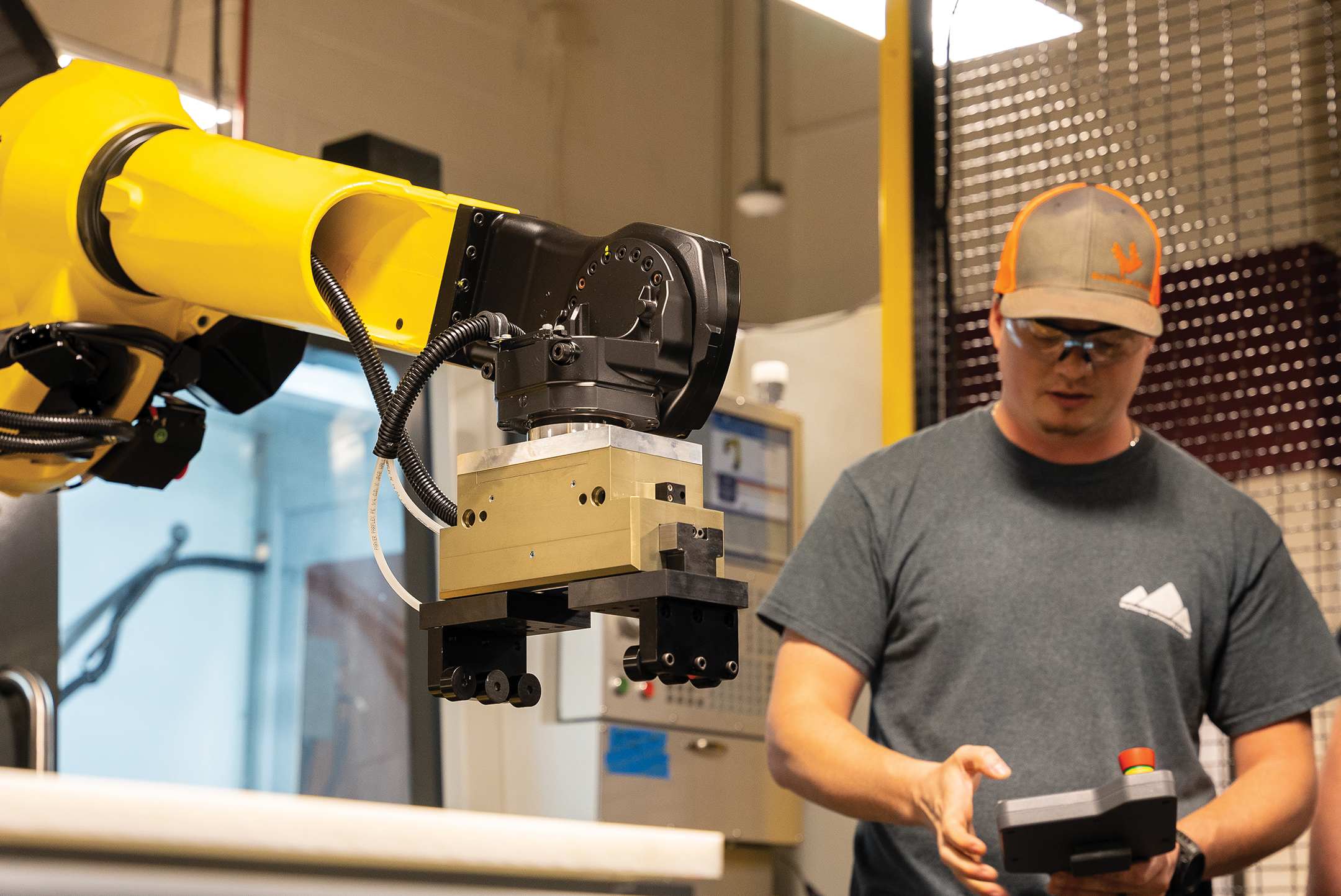
Wytheville Community College
Responding to Crucial Industry Needs
To qualify for FastForward, a program must lead to a credential that aligns to an occupation on Virginia’s High Demand Occupations List. This biennial list is determined based on an occupation’s earnings, projected job growth, and job openings. VEDP’s Virginia Office of Education Economics (VOEE) provides data and analyses that underpin this list.
VOEE Executive Director Wendy Kang said, “One of our goals is to help better equip people to feel comfortable having those conversations [in their regions], and how do you use the data to guide those conversations? It really is industry- and job-specific, as well as region-specific, in terms of what the labor market challenges are, and what strategies you’re using to work on that alignment.”
Sometimes, FastForward programs are developed based on specific requests from area businesses and industries. Stamper offered the example of his office’s work with the Virginia Ship Repair Association (VSRA), which represents ship repair companies near the Atlantic coast. The VSRA engaged VCCS and the colleges in the region to develop certifications and curricula for in-demand skills like marine welding.
Collaborations between training providers and businesses do more than address immediate workforce needs — they build long-term relationships that remain responsive to shifting worker and industry needs.
“As workers grow in their careers, [employers] can send them back to us for further training,” Stamper said. “It’s a way not only to grow a business’s workforce but to keep them up to date and skilled.”
Some FastForward students end up pursuing longer-term training programs. Westover estimated that between 10% and 20% of participants at MECC wind up getting their associate degree from the college.
Beyond the clear benefits for workers and industry, FastForward also produces a high return on investment for the taxpayers who fund the program. In 2024, a study from Brown University’s Annenberg Institute found that the average increase in earnings from a FastForward program exceeds the cost of operating the program in just eight months. Virginia has invested $96 million to support students in the program, and those graduates have earned more than $6 billion in wages.
An On-Ramp to a Better Life
Nearly 40 years ago, programming similar to FastForward made a profound difference for Westover. A high school dropout in Kansas, Westover had bounced around between unfulfilling jobs. Ironically, her break came when she was laid off from her job as an upholsterer at a boat factory. That layoff qualified her for a program established by the federal Job Training Partnership Act of 1982. She took one class at her local community college, and then another, and soon she had an associate degree. She followed that up with bachelor’s and master’s degrees before completing a Ph.D. in education. She eventually settled into the community college system.
“I see it as an on-ramp to some things that may take a little bit more time, or that might be a little bit higher level of learning,” she said. “For our region, a lot of folks thought a high school diploma was enough, because it had been since the inception of coal mining.
“Because that industry is not here, those high-wage, low-skilled jobs no longer exist. This is what you need to do if you want a job that will pay you well.”