
Putting Talent in the Right Place: A Conversation With Peter Beard
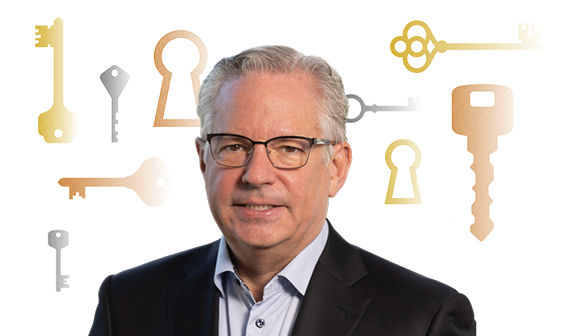
Peter Beard is vice president of policy and programs at the U.S. Chamber of Commerce Foundation, where he leads workforce development projects and initiatives. VEDP Senior Vice President of Talent and Workforce Strategy Megan Healy spoke with Beard about talent in Virginia and the rest of the country and the ways states and regions can help ensure alignment between skill development and employer needs.
Megan Healy: As a representative connected with one of the country’s largest business associations, what is the current state of talent in the United States?
Peter Beard: I’d answer this in two ways — looking at the headwinds and tailwinds we face. If we start with the tailwinds, we’re seeing a lot of positive movement around this whole idea of skills-first or skills-based hiring and advancement. We’re seeing the Society for Human Resource Management (SHRM) Foundation step up, and more and more employers focusing on skills, which is really important. I also think one of our tailwinds is that we continue to have a strong economy in the United States today, which is really, really important. The final tailwind is that we’re seeing states innovate in this space, which creates opportunities to think about leveraging that in a good way.
Unfortunately, the headwinds are also pretty significant. First, as many of us know, there’s a lot of uncertainty in today’s world, particularly with artificial intelligence. One of the biggest challenges is that skills are changing at such a fast pace. Lightcast has done research on this, and over the last three years, the average job in the United States has faced a 33% change in its skills. If you’re in the top 25% of jobs, it’s a 75% change in skills. That’s only going to accelerate.
And then, unfortunately, we also have a demographic headwind. Baby boomers are aging out of the workforce, and at the same time we have fewer and fewer people coming into it.
Healy: Here in Virginia, we’re thinking about what our future talent strategy needs to be. What do you think it would take for a state like Virginia to have a legitimate claim as America’s top state for talent?
Beard: I’m going to break it into two parts. One, I think an element of claiming you’re the top state for talent is how are you preparing that workforce of the future — individuals and students currently in the education system who are navigating their way through it — to enter the workforce for the first time? I know in Virginia you’ve got probably about 315,000 students in grades 9–12, which means every year, 75,000 folks enter the workforce from Virginia. We need to think about how we’re preparing them for this future economy.
I read an interesting article in Forbes recently that described the importance of what they call the five C’s: communications, collaboration, critical thinking, curiosity, and creativity. If folks were leaving the public school system with those skills developed during their time in high school, Virginia would be in a very good place.
Anyone graduating from a Virginia educational institution should be highly proficient in Excel, and potentially Tableau for visualization, because Excel is the foundational basis for data analytics, which will be a critical skill going forward. As we think about that, how are we helping folks acquire these skills so they can be competitive in this changing labor force?
The other part is the current workforce. You’ve got a workforce of about 4.5 million people in Virginia. One way to think about it is we need 100% of the eligible workforce with skills at the highest levels possible, which means focusing in on an equation that someone once shared with me.
The two ways to grow an economy are people and productivity, and productivity is a function of skills and technology. As we confront that demographic challenge, we ought to be focused on skill-building, having everyone attain their highest possible skillset, and using technology to increase productivity. One headwind any state faces is how to ensure that adult workers are both literate and numerate enough to obtain those new skills as we go forward.
Healy: I think currently we see a skills gap, which you mentioned, but in the future it might be a people gap. We’re not going to have enough workers. Can you tell us why, and what strategies you would recommend to attract and retain more talent within Virginia?
Beard: That shortage index looks at the number of job openings versus the number of workers who could fill those jobs. I think in Virginia, you have about 73 workers for every 100 job openings, which is a pretty severe shortage of workers. Understanding that piece becomes important in strategizing. How does Virginia continue to build an innovation economy that attracts individuals to the Commonwealth? Folks need to understand what the core jobs are here that provide great economic opportunity and mobility.
How do we also ensure that Virginia is diversifying its economy? Partly because of proximity to the nation’s capital, a significant part of the workforce is in professional services, serving other parts of the public sector. You’ve got some really good manufacturing in Virginia, and health care is a big part of the economy as well. But how are we thinking about diversity and building on what may be coming in the frontier and taking risk there?
We’re seeing movement in certain states, like Illinois, New Mexico, and others, in quantum computing. Obviously, Virginia h as assets related to data centers. In fact, a big part of this technology is in Virginia. Opportunities lie in the middle-skill occupations, which require education and skills beyond high school, but not quite a four-year college degree. How do you make the state a desirable place for folks? Part of it is that diverse economy.
Healy: You engage with businesses every single day, and they’re telling you they can’t find the right workers, the right skills. How should they engage in this conversation about attracting and retaining talent? What does that look like for the business community?
Beard: In many respects, it starts with leadership. I think the business community in many, many regions comes together because they want a strong regional economy, and it takes businesses to help grow that. And it takes state-level leadership, the governor and business leaders coming together, agreeing on where we want to be as an economy going forward, understanding where we are today, and mapping out a plan to get there.
How do we support reskilling and retooling some of the existing workforce? If you think about data centers, how are we retooling electricians, HVAC, and plumbing professionals who are necessary for not only building, but maintaining those critical parts of the infrastructure? A good example is Virginia’s shipbuilding capabilities, where a number of those workers are probably about to retire. How are we looking at those legacy jobs and ensuring we have replacements?
One other thing is how we think about economic development. Does Virginia want to be a hunter? Who should we go after, who belongs in Virginia, and how do we target them to come here and demonstrate that the workforce is ready for them? Or should Virginia take a more passive approach, being a gatherer and waiting for folks to show up at our front door? The work that Virginia did to bring Amazon to the Commonwealth is a good example of “Let’s be a hunter,” but how do we use data and AI to understand which companies are thinking about relocating, and are they the kinds of companies that belong in Virginia?
Healy: The Strada State Opportunity Index categorizes Virginia as a developing state for employer alignment based on measures of college-level employment and labor supply and demand. What goals, outcomes, or metrics do you think should be used to assess alignment between education and employment?
Beard: I think part of it gets down to how we align incentives around the performance you’re seeking. I spent part of my most recent career in Houston in workforce development. We saw Texas adopt, in essence, a performance orientation funding system for the community colleges, which changes the incentive to think about how we create credentials of value, and begin thinking about how we ensure positive educational outcomes are a result of the pathways and programs of study within higher ed institutions.
More fundamentally, how are we fostering engagement with employers to help lead and ensure those programs build capabilities so that someone coming out of any public or private Virginia institution has a pathway to a job that requires a four-year college degree? One of the big challenges throughout the country, and probably in many parts of Virginia, is that college graduates are underemployed in roles that don’t require a four-year degree. We should be upskilling and reskilling them so they have a pathway to be fully employed, given their level of education and skills. Also, how do we make our programs of study more agile to meet the quickly changing skills requirements, and have that informed by the skills employers say they need.
Healy: One of the things Virginia is emphasizing and investing in is work-based learning experiences. We know some students say they need experience to get a job, but they need a job to get experience. You mentioned the five C’s that are important for employers, so what do you think is the role work-based learning, specifically internships, should play in talent, alignment, attraction, and retention?
Beard: I think about work-based learning as a continuum. It also gets to what I would describe as intensity as well as dosage. Internships and apprenticeships should be a pretty intense set of experiences that both the educational institution and the employer must be prepared to execute. Roles should be considered very carefully to ensure that employees are prepared to enter the workforce and that employers are prepared to support them effectively. I think those are the gold standards of actually getting people work-ready by providing experience.
There can be dosage things where we think about project-based learning and opportunities for folks to work on and try to solve real-life business problems. Here at the Chamber Foundation, we have Employer-Provided Innovation Challenges, our EPIC initiative. How do you begin to bridge the gap and bring employers into the classroom, working with a professor or teacher and students on a specific challenge for five or six weeks? We certainly need more internships and apprenticeships, but we should also consider how we provide the dosage for the realities of what it means to be in the workforce.
How do we not only provide opportunity in the workplace, but replicate the workplace within education so folks get that experience, given how challenging it can be to get everybody into an internship or apprenticeship? While large employers generally have the bandwidth to do fairly effective internships and apprenticeships, it’s really the small and mid-size employers where there’s huge opportunity to develop new skills. Unfortunately, smaller businesses probably don’t have the type of HR department and management needed for that.
Healy: That’s some of the work we’re trying to do in Virginia around our Innovative Internship Fund and Program — working with small businesses, incentivizing them through a match to bring on an intern, and then wrapping supports around them. It’s very, very important to the businesses, and it’s important for Virginia and economic development so we retain our talent in Virginia. How about individuals on the sidelines who don’t realize they’re in a job and not a career? What do you think are the most significant barriers to employment in today’s economy?
Beard: Obviously, opportunities are within the education system to get better at that. But if you’re already in a job and you don’t know that the public workforce system is available to help you chart a career pathway, or that organizations like a United Way or Goodwill provide career pathway services, you could be stuck there. A big piece is helping people determine where they are now, and then find a pathway that gets them to the next stage of their career. I think there’s huge opportunity in the long run to figure out how we use artificial intelligence and agents to help people find their pathway. But at the same point, we’ve got to meet individuals where they are in the workplace and recognize they’re probably stressed. They may have applied for jobs many, many times and heard nothing.
I talked recently with someone who shared that a staffing firm was using AI agents to do the initial candidate interview, and they would use that as a way to decide whether a candidate was ready for that job. But the candidate got a call with feedback. Now there’s a feedback loop that I think is really important, helping people begin to do that — “We don’t think there’s a role for you in this job, but here’s another two or three jobs you might consider.” That’s the kind of support we’ve got to provide.
The other challenge any region or state confronts is child care. As you know, it gets to be expensive and potentially sidelines a portion of our workforce because it doesn’t make economic sense for them to go to work if it’s still costing them money, so a spouse or partner stays home to provide child care. Here at the Chamber Foundation, we’ve done research on the untapped potential in this space. I’ll use North Carolina because it’s an adjacent state, but also because it has many similarities to Virginia. In North Carolina, the estimate is $1.3 billion in missed state tax revenue due to turnover and absence in the workforce.
Child care becomes a critical thing that has two main goals. One, how do we ensure our children are starting out well in life? We know quality early education is critical for brain development and long-term success. But also, how do we relieve stress on adults so they have the opportunity to fully participate in the workplace?
I think another challenge is housing affordability. Those of us in the Washington area know that’s big, and we’ve got to find ways to make housing affordable because it’s how people choose locations. Then transportation may become another barrier.
Child care becomes a critical thing that has two main goals. One, how do we ensure our children are starting out well in life? But also, how do we relieve stress on adults so they have the opportunity to fully participate in the workplace?
Peter Beard, Vice President of Policy and Programs, U.S. Chamber of Commerce Foundation
Healy: What is your perspective on the role of AI in the development of and demand for talent?
Beard: I think it’s still emerging. We’re trying to figure out exactly what will happen as AI comes into this. But it also requires us to innovate very carefully in this space. We know AI increases productivity. The U.S. Chamber of Commerce surveys small businesses, and they adopt AI and increase their productivity. The residual benefit is that they hire more people. I think AI has the potential for bringing folks in, but it also gets to the point that AI may not take your job — but the person who knows AI and has the skills for AI might take your job.
How can we avoid using AI to knock out the initial rungs of the ladder? It requires, in many respects, restructuring entry-level jobs not to eliminate them, but to help develop individuals so they have the experience to become the mid-level person most folks are going to want. We’ve got to retool existing ladders or progressions by modifying those jobs and how we bring folks in. But I do think we’re going to also see collisions coming that we’ll have to track and integrate into education systems.
How can we avoid using AI to knock out the initial rungs of the ladder? It requires, in many respects, restructuring entry-level jobs not to eliminate them, but to help develop individuals so they have the experience to become the mid-level person most folks are going to want.
Peter Beard, Vice President of Policy and Programs, U.S. Chamber of Commerce Foundation
A recent Harvard Business Review article debated this question of whether or not the chief human resource officer role and the chief technology officer role should be merged. There are three points of that they view. One is that they should be, one is that they shouldn’t be, and the third is that they should be partnering in a different way to partly merge them. I think we can use lots of different strategies to bring AI into the workplace and understand its dimensions. Here at the U.S. Chamber, we do a hackathon where teams think about business challenges within the Chamber that need to be solved, bringing in technology and artificial intelligence, and then implementing those solutions.
I think this idea can help the business community figure out the applications and how we ensure our employees have the skills to participate. But I also think hackathons could show up in the education space — how do teachers think we could use AI in the classroom in different ways? Those are some of the things we’ve got to be thinking about, because if folks leave the education system without AI skills — understanding prompts, understanding the ethics — they’re going to be at a disadvantage.
Healy: We’ve covered a lot today. What’s the most important talent-related issue we haven’t discussed?
Beard: How we pay for the education and skills people need. When you think about the workforce of the future and the individuals working their way through the education system, there are college savings plans, loans, scholarships, and other things. But when you think about the big chunk of our human capital that is already in the workforce in the United States, which is 170 million individuals, how are we going to upskill and reskill them at scale, and who funds that?
I think there are opportunities for public-private innovations in that space. In fact, one of the innovations the Chamber Foundation is partnering with the Chamber on is something called a skill savings account, which is something very similar to an FSA or an HSA, but an individual could buy or enroll in the skills program that gets them to the next level of their career growth. It would require amending Section 127 of the Internal Revenue Code, which is about education assistance benefits — where employers can provide education assistance tax-free to individuals. How can employees and employers contribute to this so there’s a pool of funding that allows workers to go get their next set of skills? I think that’s one of the biggest challenges we’re going to confront.
Healy: So, do you think we should invest in our current workforce, or if we have limited dollars, should we invest in individuals currently on the sidelines for these next-skilling/reskilling opportunities?
Beard: Oh, that’s a tough one. I think there’s huge opportunity from a productivity standpoint on the upskilling and reskilling to retain, but if you were thinking about public dollars, it’s probably more on how you get sidelined folks back into the workforce, because they probably need additional wraparound supports. But can we find ways to leverage the 529 plan and sell units so that employers can provide upskilling and reskilling? Are there either tax deductions or credits that would encourage employers to invest in reskilling and upskilling their workforce? Once again, it’s a question of the most effective use of public dollars, but also the incentives the Commonwealth can implement that might encourage private investment as well.
Healy: Thank you so much, Peter. I really appreciate your insights, your thoughtfulness, your strategies, and all the work that you do, specifically around talent and workforce.
Beard: Megan, it was my pleasure. Thank you for having me.
For the full interview, visit www.vedp.org/Podcasts