A Proving Ground for Cutting-Edge Technology
How Virginia contributed to the development of the internet and other essential advancements
It’s not exaggerating to say that Virginia has been part of the internet since day one.
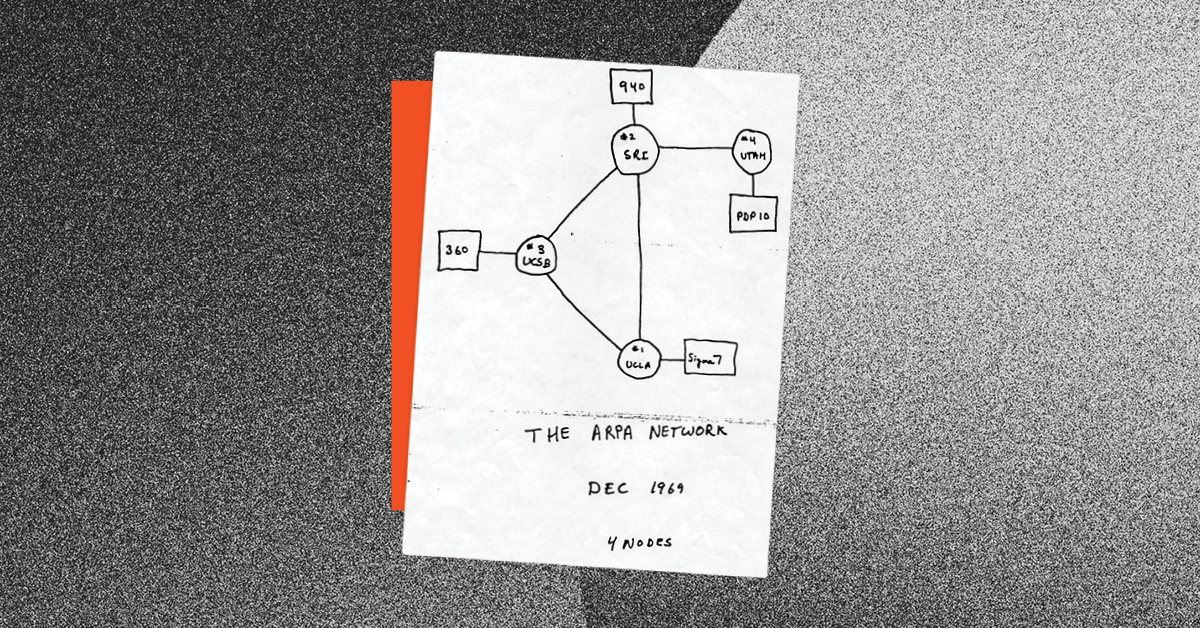
The Commonwealth’s proximity to the federal government in Washington, D.C., makes it a natural place to deploy new technology. In Northern Virginia, network connectivity traces its roots to the U.S. government’s experiments in wide-area fiber optic networking in the 1960s. Around the same time, the first of two related federal projects that became the modern internet was getting underway at the Arlington County-based Advanced Research Projects Agency (now the Defense Advanced Research Projects Agency, or DARPA). The Advanced Research Projects Agency Network, better known as ARPANET, was the first public network to use packet-switching technology, a technical foundation of the internet.
The National Science Foundation (NSF) Network (NSFNET) was the other predecessor that came out of Virginia. The Alexandria-based National Science Foundation sponsored the NSFNET to promote academic research and networking, creating several nationwide networks that became the backbone of the early internet.
The industry briefly moved north to upstate New York with the founding of Advanced Network and Services (ANS), established in 1990 by NSFNET partners to support the network’s transition into a commercial entity. Four years later, it came back to the Commonwealth when ANS sold its networking business to America Online (AOL), then based in Loudoun County.
In 1992, a consortium of private companies founded Metropolitan Area Exchange, East (MAE-East), first established in Washington and soon expanded to Fairfax and Loudoun counties in Northern Virginia. A year later, the NSF awarded MAE-East a grant, establishing it as one of four original Network Access Points, along with Chicago, San Francisco, and Pennsauken, N.J.
Data center momentum in Northern Virginia began to accelerate a few years later, sparked by AOL moving to Loudoun County and Equinix building its first data center nearby. Data center operators were attracted to what became known as “Data Center Alley” by the nearby infrastructure.
Physically, an intersection of mission-critical fiber backbones connects Virginia to all major markets in the U.S., along with the highest dark fiber density in the world. That’s in addition to three subsea transatlantic communications cables that land in Virginia Beach: MAREA (connecting to Bilbao, Spain), BRUSA (to Rio de Janeiro), and Dunant (to Saint-Hilaire-de-Riez, France).
NASA Langley: The Birthplace of Modern Flight
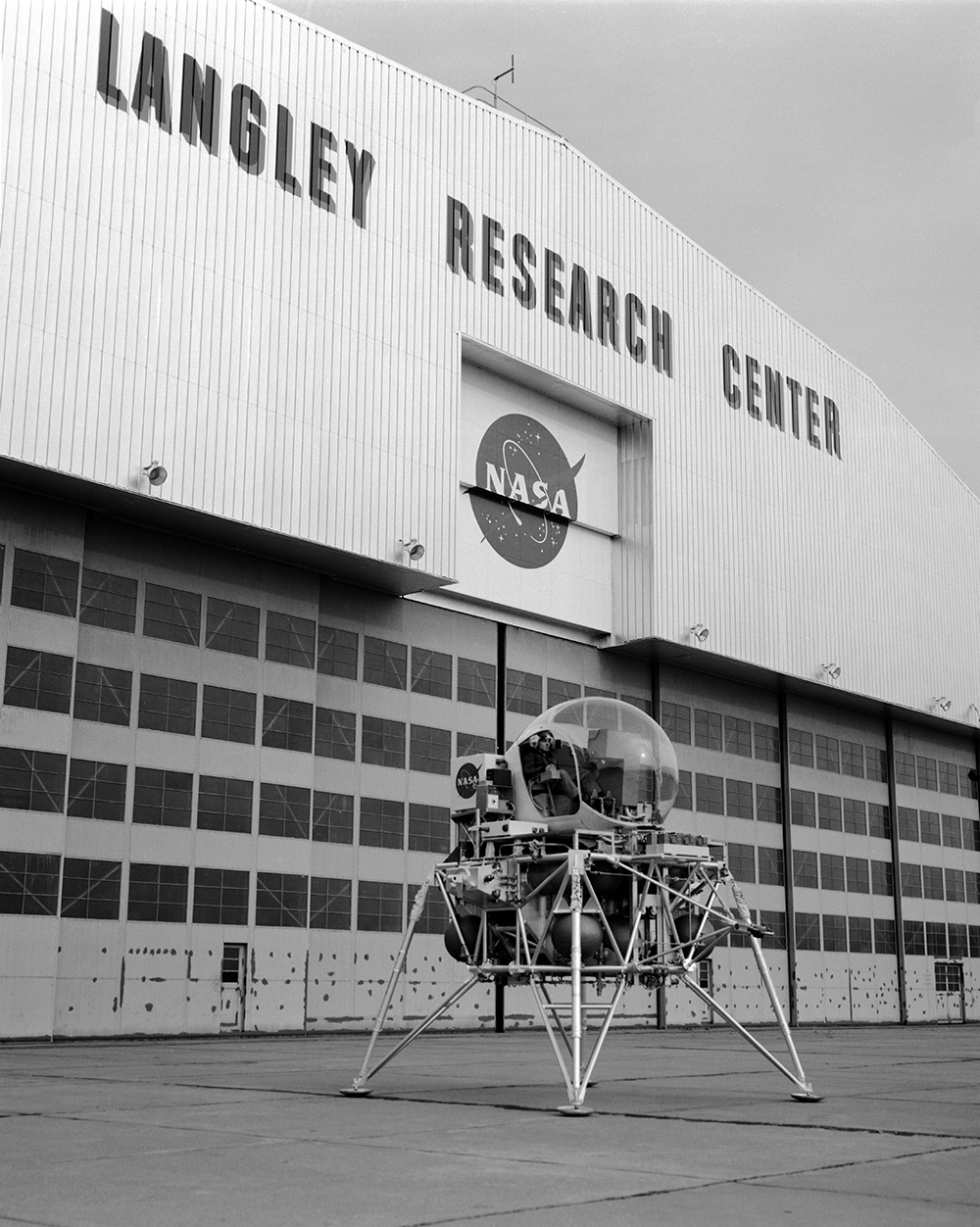
Tucked away in Hampton next to Joint Base Langley-Eustis, the National Aeronautics and Space Administration’s (NASA) Langley Research Center has contributed to aerospace research, testing, and development for more than 100 years. Langley is NASA’s oldest field center and a major player in advancing modern flight and space science.
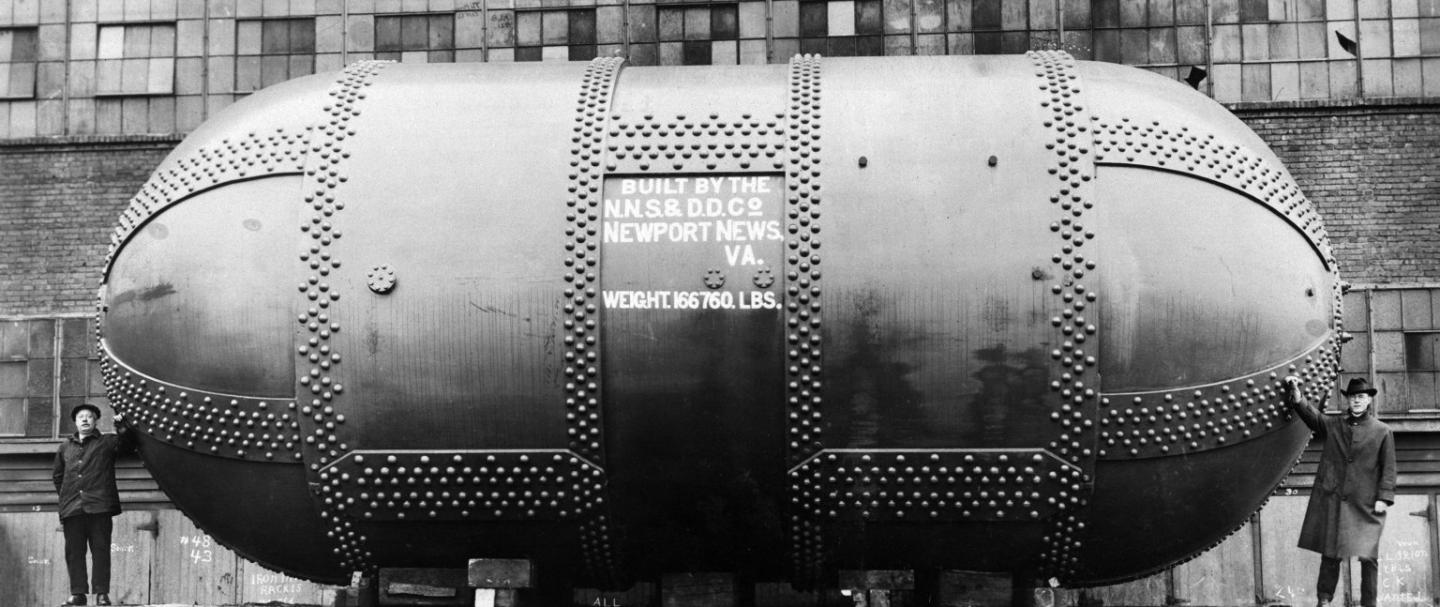
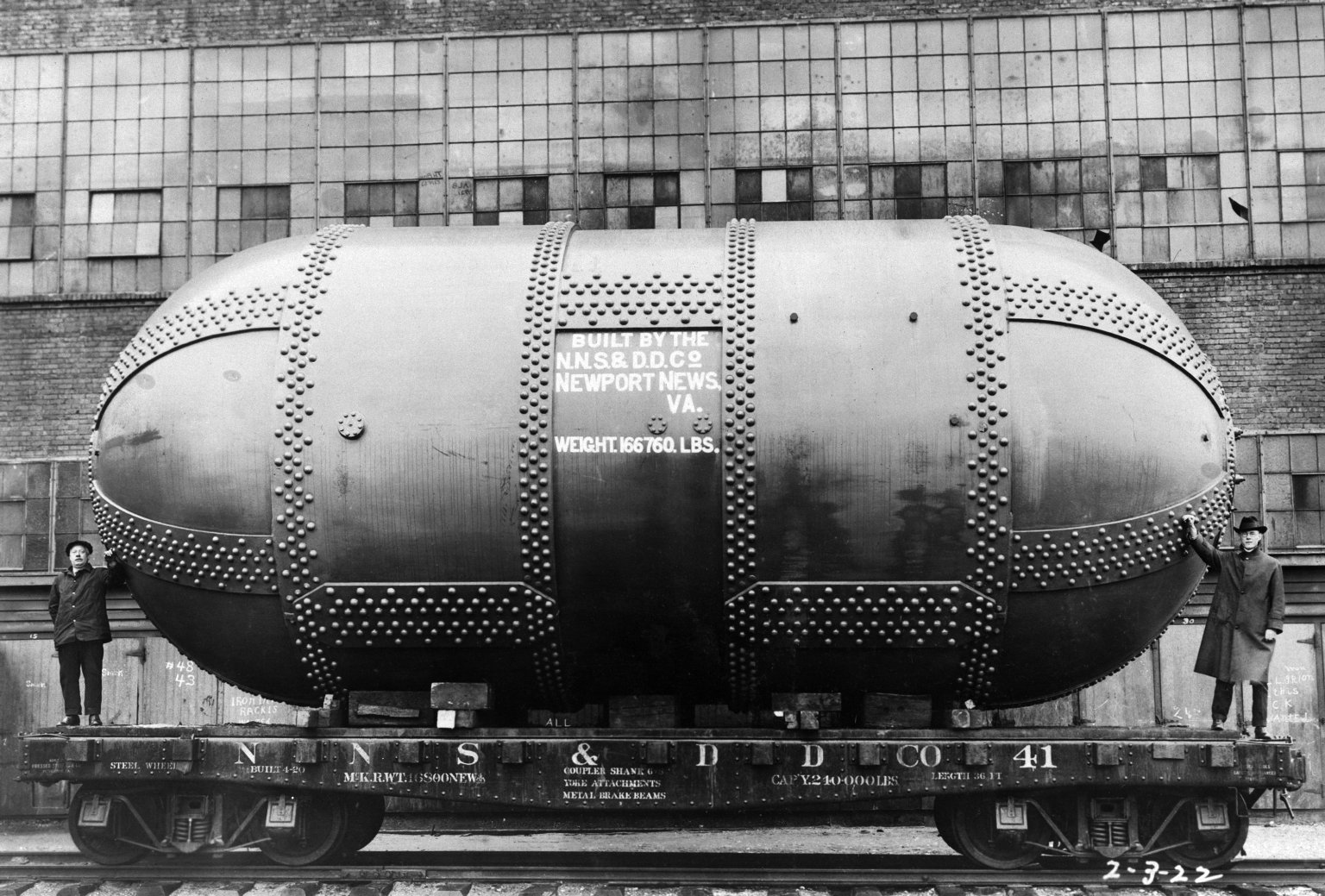
In 1922, Newport News Shipping and Drydock Company built the world’s first pressurized wind tunnel, the Variable Density Tunnel (VDT), for Langley. The steel railcar-sized, capsule-shaped machine saw service for more than two decades, during which it made airfoil design studies still referenced by aeronautical engineers today. The retired VDT, designated a National Historic Landmark in 1985, now occupies a place of honor on display at Langley.
Commercial and military aircraft across the nation have been shaped and developed using technology created through Langley’s extensive wind tunnel testing.
Among those technologies are winglets, a standard feature at the end of the wings of many large planes. Winglets, which reduce induced aerodynamic drag, were developed and tested by Langley’s Richard Whitcomb in the 1970s. More recently, Langley developed the Traffic Aware Strategic Aircrew Requests software that helps pilots and ground transportation teams find better routes in transit, taking into account factors like traffic, weather, and restricted airspace.
Langley’s outsized role in NASA’s history was on display in early 2026 with the Artemis II mission. The Orion spacecraft that carried the Artemis astronauts around the moon and back to Earth was heavily tested at Langley’s Hydro Impact Basin facility, starting in 2011. Langley scientists played a major role in developing the heat shield that protected the astronauts during reentry.
“Artemis is a very complex mission, and each system must fit together without fail. All the analyses, over several decades, got us to the point of launching humans farther than they have ever gone before,” said Dr. Trina Marsh Dyal, center director at Langley. “We still have active analysis going on to make sure we’re in safe condition to launch. We have folks who are seeing decades of their work finally out on the launchpad.”
The Artemis mission is just the latest Langley contribution to space science. NASA’s seven Mercury astronauts trained at Langley. Langley was also home to the West Area Computers, the Black women who worked as “human computers” and did the math required to rocket those astronauts into space; notably, Mary Jackson, Katherine Johnson, and Dorothy Vaughan, immortalized in the book “Hidden Figures” by Margot Lee Shetterly and the 2016 movie of the same name. NASA’s Washington headquarters have been named after Jackson since 2021.
After President Kennedy tasked NASA with landing astronauts on the moon by the end of the 1960s, Langley fostered the expertise making it possible. Langley engineers John Houbolt and Bill Michael developed the so-called lunar-orbit rendezvous architecture that enabled the landings of Project Apollo with a single rocket launch each.
“There are still unanswered questions that come from our past,” Dyal said. “The inspiration is to solve those problems that still exist in the world today. How can we figure out what can be? How can we apply our expertise to the art of the possible? None of this happens in isolation. We need partnerships to bring the best minds to bear on those problems. We want that force multiplier so we can accelerate how we solve those challenging problems.”
The inspiration is to solve those problems that still exist in the world today. How can we figure out what can be? How can we apply our expertise to the art of the possible?
The inspiration is to solve those problems that still exist in the world today. How can we figure out what can be? How can we apply our expertise to the art of the possible?
Dr. Trina Marsh Dyal Center Director, NASA Langley Research Center
The ‘Hidden Figure’ Behind GPS Technology
Dinwiddie County-born Gladys West was educated at Virginia State College (now Virginia State University) and Virginia Tech. She was hired by the U.S. Navy in 1956 and worked for 42 years as a mathematician and computer programmer at the U.S. Naval Proving Ground (now the U.S. Naval Surface Warfare Center Dahlgren Division) in King George County, near Fredericksburg. Her husband Ira also worked at Dahlgren as a mathematician; the couple comprised half of the base’s Black workforce at the time.
West became proficient in the Fortran IV programming language as computers were being introduced into the Navy’s day-to-day operations. She led a team that used complex algorithms to deliver an extremely accurate model of the Earth’s shape, establishing the flight paths now used by Global Positioning System (GPS) satellites. Working with an IBM 7030, the world’s fastest computer at the time, she laid the foundations for GPS systems to achieve their current levels of precision and usefulness for navigation.
Like Jackson, Johnson, and Vaughan, West’s contributions largely went unacknowledged in her lifetime. She received overdue recognition in 2018 with her induction into the U.S. Air Force Space and Missile Pioneers Hall of Fame. In 2021, she earned the Webby Lifetime Achievement Award from the International Academy of Digital Arts and Sciences for her development of the satellite models. She died in January 2026.
“The Navy stands on the shoulders of the geniuses that have been advancing our technology in the Navy,” said retired Navy Adm. Philip S. Davidson, former commander of U.S. Indo-Pacific Command, at a 2023 event at Dahlgren honoring West. “We’re standing on Dr. West’s shoulders to execute the mission of the United States.”
Dahlgren was also the location of the country’s first unmanned aerial vehicle flight, known as the “Wild Goose” project. On Sept. 15, 1924, Lt. John Ballentine and electrical engineer Carlos Mirick completed the 40-minute flight, during which a bag of sand was strapped into the cockpit to account for the weight of the missing pilot.