
Bespoke Training for Emerging Workforce Needs
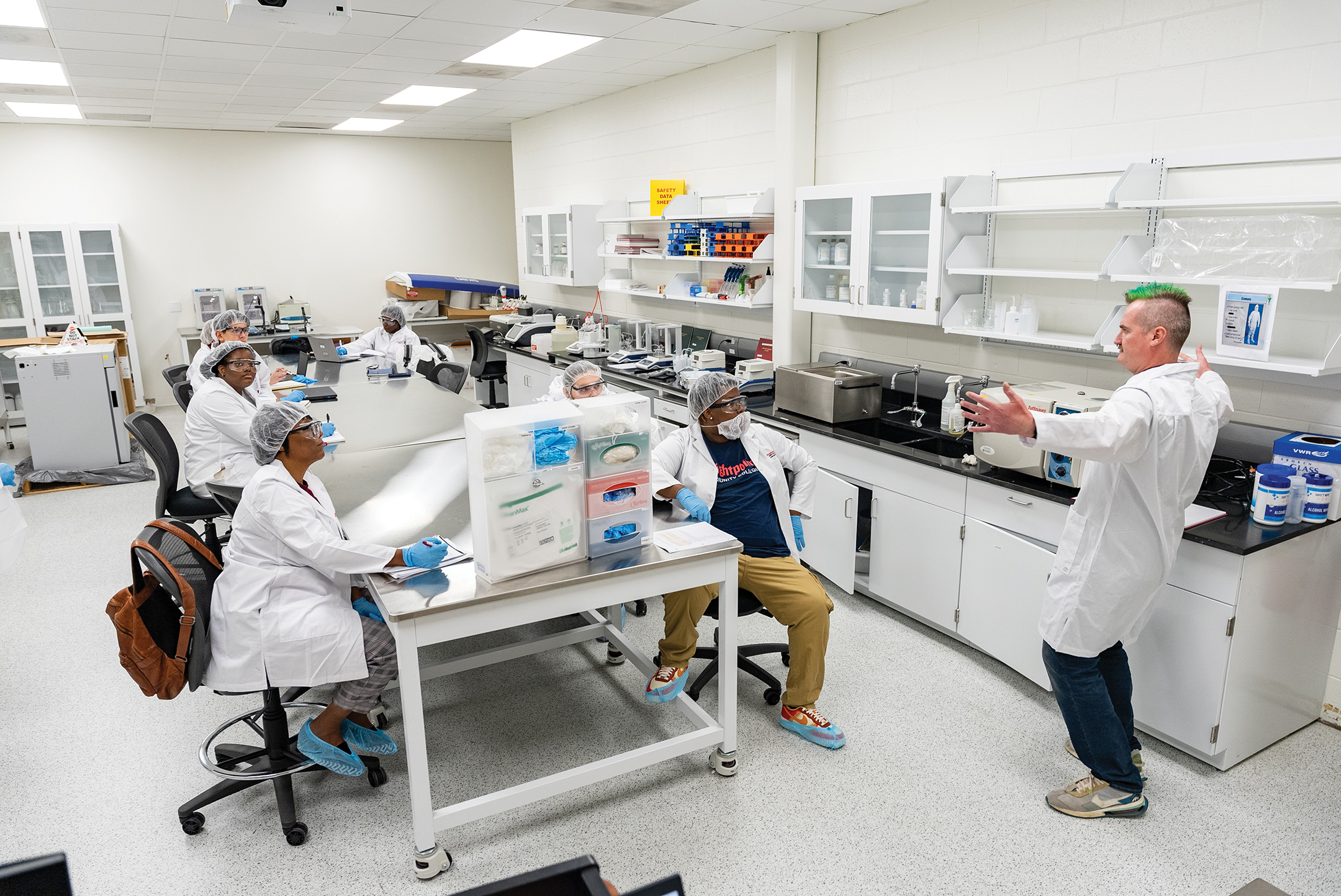
Pharmaceutical manufacturer Civica Rx expanded into Virginia in 2021, building a sterile injectable drug manufacturing facility in Petersburg. The company turned to the Virginia Talent Accelerator Program to fill approximately 300 positions.
New or expanding companies want to know that they will be able to hire workers with the skills they need. While outside training providers offer established but generic faculty, facilities, and programs, in-house solutions allow for customization but require significant investment. While this may be a difficult choice for companies in other states, Virginia provides employers with talent solutions that leverage the advantages of both types of training.
In partnership with the Virginia Community College System (VCCS), VEDP’s Virginia Talent Accelerator Program connects employers with training resources that speed and simplify startup and expansions. Launched in 2019, the Talent Accelerator has been named the country’s top customized workforce training program by Business Facilities every year since 2023 (and by Area Development in 2025) for providing resources that support recruitment, training, and more. “It’s highly customized to the needs of each employer,” said Elizabeth Creamer, vice president of workforce development and credential attainment at the Community College Workforce Alliance (CCWA). CCWA is the workforce development division of Richmond-area community colleges Brightpoint and J. Sargeant Reynolds.
“Part of the vision for the Talent Accelerator is that, while VEDP is with an organization for a period of time, ultimately that company will be embedded in the community and looking for community resources. So VEDP, very wisely I think, envisioned that community colleges should be working alongside them from the beginning,” Creamer said.
Highly Customizable Programming
Community colleges benefit from the flexibility that allows them to move more quickly than four-year universities and tailor programs to a business’s specific training needs.
“We try to provide the hard skills and training that students will need, the equipment they will be exposed to, and the contacts they need with business and industry,” Creamer said.
Patrick & Henry Community College (P&HCC) serves the city of Martinsville and Henry County near the North Carolina border, an area hit hard in the 1990s by shifting global economic conditions that decimated the local textile and furniture industries. Local leaders are working to attract more advanced manufacturing operations, and as the community college for the region, P&HCC works closely with the Talent Accelerator to develop training programs for companies new to the region. P&HCC President Greg Hodges noted that the college is always a part of conversations between Talent Accelerator staff and manufacturers evaluating an expansion in the region.
“The Martinsville-Henry County community has been a manufacturing community for well over 100 years,” Hodges said. “We’ve pivoted now in the last 20 years to talk more about advanced manufacturing, clean lean manufacturing, and Patrick & Henry has been a critical player in helping to redefine manufacturing and creating programs that will attract business and industry.”
That support includes development of an on-campus manufacturing center. The college’s Manufacturing, Engineering, and Technology Complex opened in 2017, through a partnership with VCCS. The complex provides 103,000 square feet of space for students to gain hands-on training in automation, instrumentation, mechatronics, robotics, advanced welding, engineering, and motor control. Within the complex is a “Workforce Flex” space.
“Once a company has announced their launch into Virginia, they can put their equipment in the Workforce Flex space,” Hodges said. Using guidance provided by the Talent Accelerator, he continued, “We begin training those employees before the company has even stood up their facility. The day they open the building, employees are ready to begin work. There’s no downtime.”
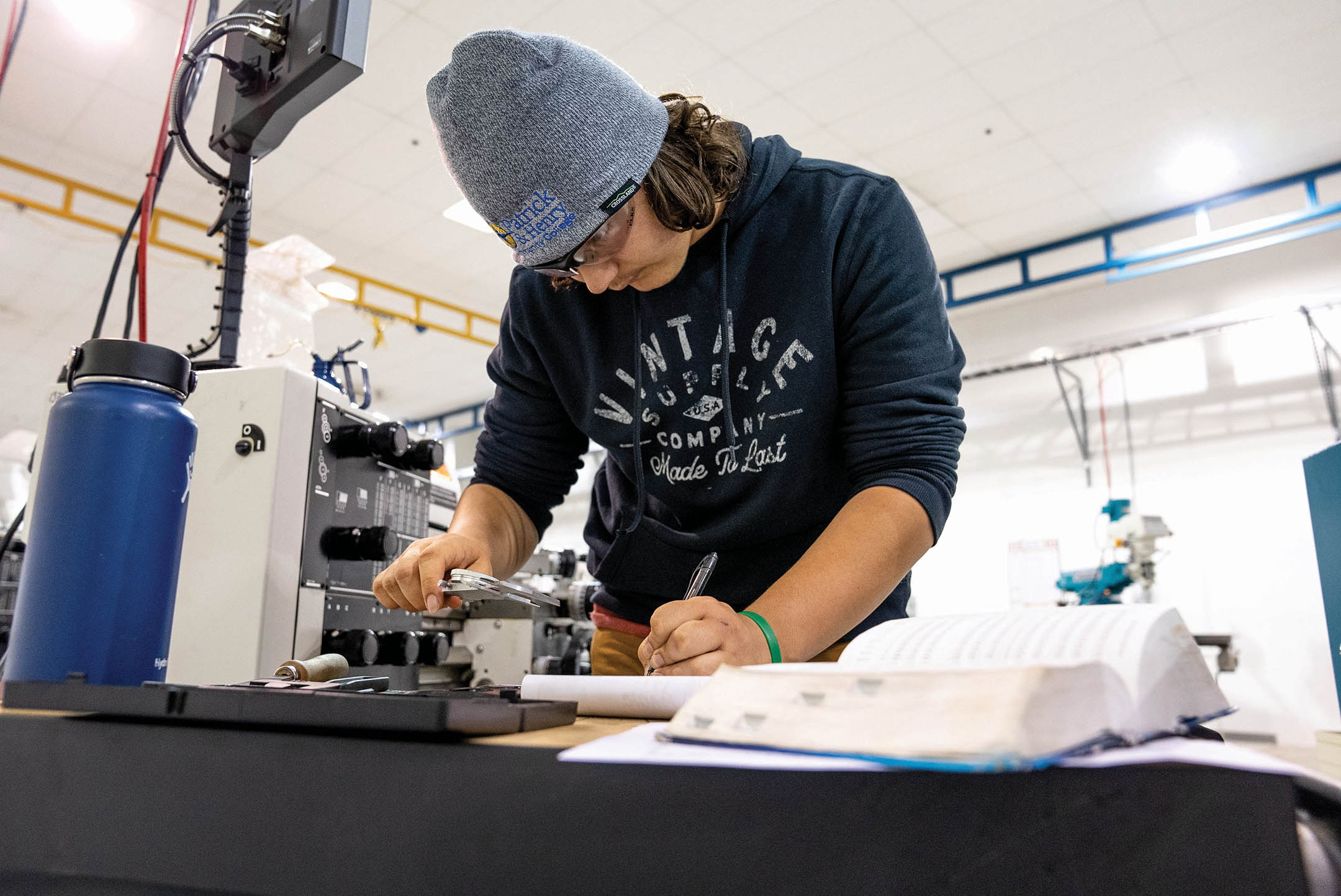
Patrick & Henry Community College
Building a Pharmaceutical Ecosystem
In addition to being highly customized, training resources are also typically prepared on a dramatically accelerated timeline. That was the case for what Creamer called “one of the most impactful partnerships I’ve ever participated in through CCWA.”
The Alliance partnered with VEDP to deliver customized training to Utah-based pharmaceutical manufacturer Civica Rx. In 2023, the company opened a 140,000-sq.-ft. sterile injectable manufacturing facility in Petersburg to produce insulin and generic injectable drugs for hospitals in vials, cartridges, and pre-filled syringes. The plant created approximately 300 jobs — and a need for highly specialized training.
“Because of the nature of the pharmaceutical ecosystem in Virginia at the time, we started with technicians with limited experience in pharma,” said Angel Colucci, Civica’s director of business excellence. “At the technician level, we interview for potential and transferable knowledge.”
For example, Colucci said, “The majority of our technicians are going to come in and run our filling lines, so we want to know if they can run a complicated piece of equipment. Are they able to critically think through a challenge with that equipment? Do they know how to perform basic troubleshooting, and can they communicate concerns? We are looking for that mechanical aptitude, as well as attention to detail.”
Preparing these candidates to work in pharmaceuticals would require specialized training that wasn’t then available in Virginia, so VEDP set out to help Brightpoint and CCWA build customized programs. VEDP connected CCWA with a national subject matter expert who helped identify lab specifications and equipment that Brightpoint would need to support on-site training. VEDP consultants also served on the faculty hiring committee.
Brightpoint now offers a two-semester career studies certificate that prepares students to either go into a company as a technician or pursue further education in pharmaceutical manufacturing. This work also led to a partnership with the Virginia Manufacturers Association, Civica, and pharmaceutical chemical manufacturer AMPAC Fine Chemicals that resulted in a fast-track, noncredit pharmaceutical manufacturing technician (PharmaMT) credential. Less than a year passed between conceptualizing the program and enrolling the first students.
“Students have a choice of two tracks, a credit track or a noncredit track, to get the education and training they need for pharmaceutical manufacturing,” Creamer said. Brightpoint is now working to launch an associate degree in pharmaceutical manufacturing that will prepare students to work in the field and pursue a bachelor’s degree in pharmaceutical science.
A Continuing Relationship
Since the Civica production facility opened, Colucci said, customization has continued. “When people come here, they provide feedback to Brightpoint on their experience here. Were they ready? What other training do they wish they had?” she said. “Brightpoint’s changing their program based on that, which is fantastic.”
Colucci added that VEDP continues to provide support, including leadership training and assistance refining onboarding materials. “We have a representative who works with us,” she said. “We talk about our needs and challenges, and then they help us tailor a solution.”
Having worked with startups in other states, Colucci said she has found her relationship with VEDP to be more engaging. “It’s really great, as a startup, to have a partner who’s coming to the table asking, ‘Have you considered this? How do I help here?’”
For Hodges, the work spent customizing training for employers is a simple “win-win” for community colleges. “It provides the financial incentive structure for the employers, but it also provides training that helps students become great employees able to advance in their positions,” he said.
Hodges added, “We say that here at Patrick & Henry we award lots of fancy acronyms but, ultimately, we’re awarding the J-O-B degree — and VEDP is a critical piece of that credential.”
It’s really great, as a startup, to have a partner who’s coming to the table asking, ‘Have you considered this? How do I help here?’
Angel Colucci, Director of Business Excellence, Civica Rx
For Hodges, the work spent customizing training for employers is a simple
“win-win” for community colleges. “It provides the financial incentive structure for the employers, but it also provides training that helps students become great employees able to advance in their positions,” he said.
Hodges added, “We say that here at Patrick & Henry we award lots of fancy acronyms but, ultimately, we’re awarding the J-O-B degree — and VEDP is a critical piece of that credential.”